Vision
The Choice Between Heritage & Density
Cities need more housing. They also need to preserve their character. These objectives are presented as contradictory. They aren't.

Planning debates often pit heritage against housing, as if protecting historic character requires keeping neighborhoods frozen in amber. This framing serves neither objective well. Cities have always evolved. The question isn't whether to allow change, but how to manage it intelligently.
European cities demonstrate that density and character coexist successfully. Paris, Barcelona, Amsterdam—these are dense cities with strong architectural identity. They achieved this through consistent use of materials, respect for street patterns, and buildings that relate to human scale even when they're substantial structures.
The issue isn't density itself. It's poor quality density that ignores context. Glass towers dropped into brick neighborhoods create jarring discontinuity. Buildings that ignore the street and turn inward damage urban fabric. Developments that privatize everything and contribute nothing to public realm erode community.
We can build densely while respecting context. This requires using materials that relate to existing architecture. It means maintaining street lines and understanding how buildings address sidewalks. It demands creating genuine ground-floor activation rather than dead frontages. These aren't revolutionary ideas. They're basic urbanism.
Brick allows contemporary buildings to sit comfortably among older structures. The material provides continuity while permitting different architectural expression. You can design a clearly modern building that still relates to its Victorian neighbors through shared materiality. This approach respects heritage without resorting to pastiche.
Height becomes less problematic when buildings are well-proportioned and use appropriate materials. A six-story brick building with good street presence feels more contextual than a three-story building clad in materials that jar with surroundings. Scale matters, but so does execution.
Mixed-use development helps activate neighborhoods throughout the day. When buildings combine residential, retail, and workspace, streets remain vital. Single-use zones create dead periods. Housing-only developments empty during work hours. Office districts die at night. Mixing uses creates resilience.
Next Thought
Why We Still Draw Details By Hand
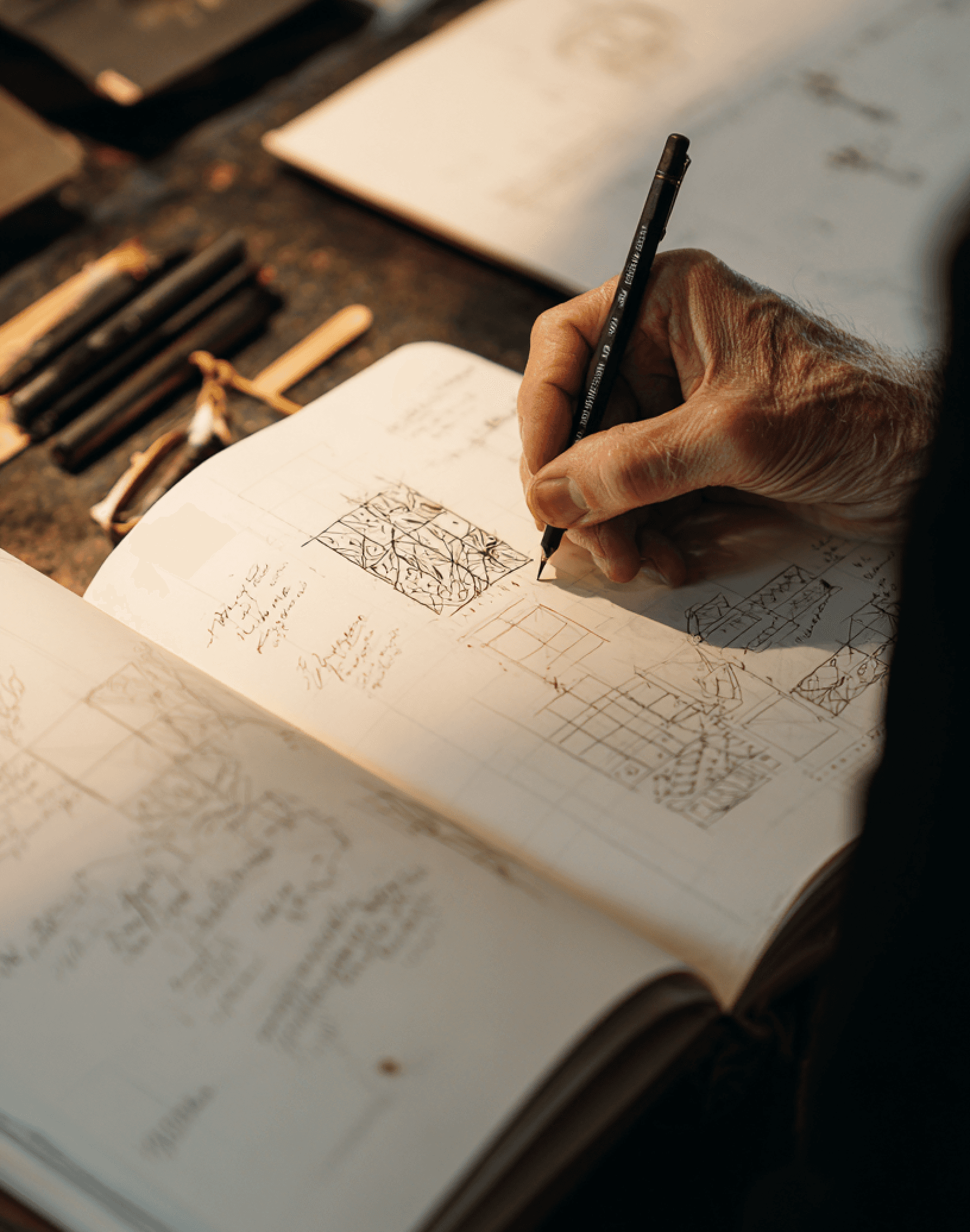
Digital tools dominate architecture. Parametric modeling, AI-assisted design, automated documentation. These technologies offer real advantages. But something essential gets lost.