Craft
Why We Still Draw Details By Hand
Digital tools dominate architecture. Parametric modeling, AI-assisted design, automated documentation. These technologies offer real advantages. But something essential gets lost.
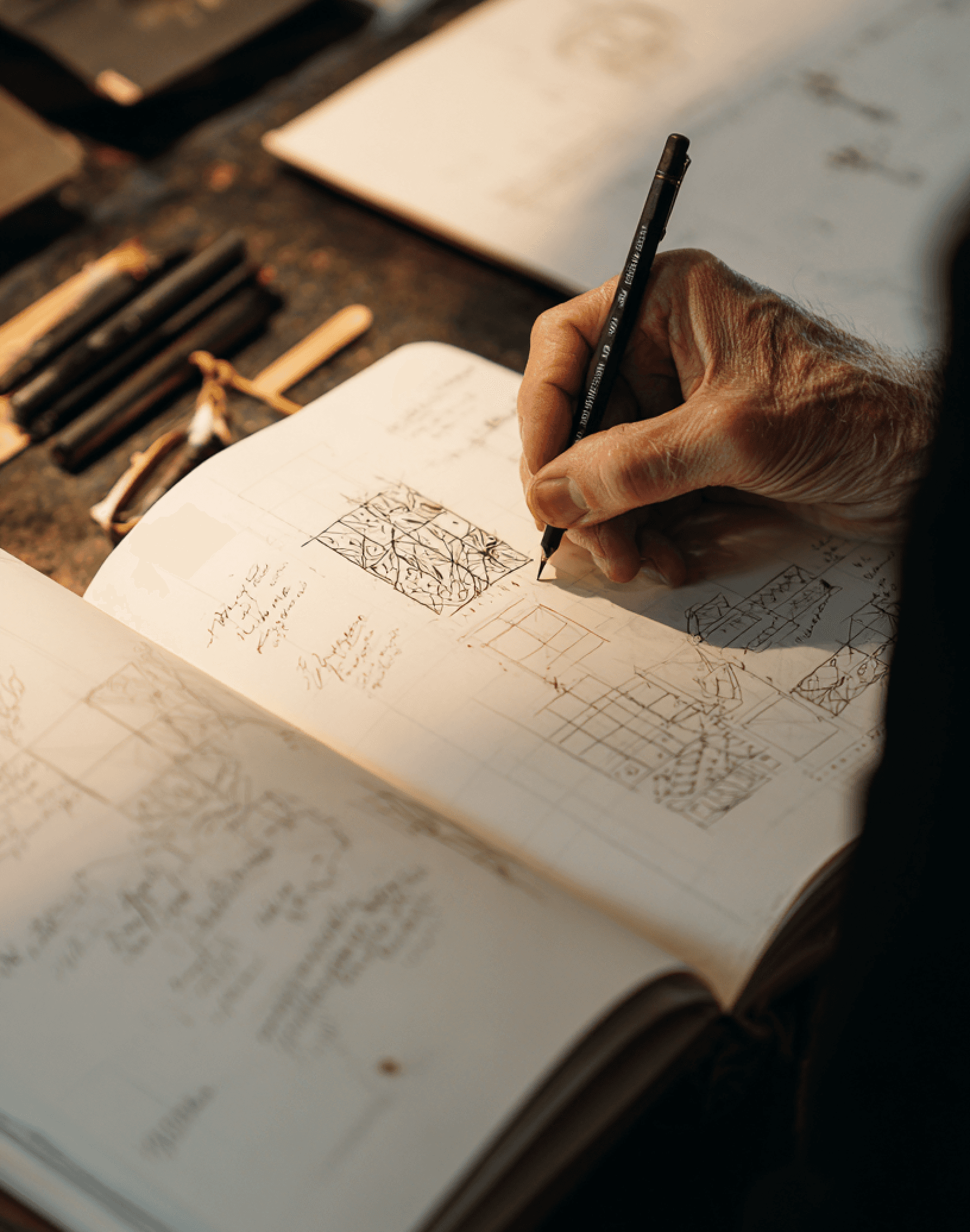
Hand drawing forces you to understand how things actually work. When you draw a brick corner detail, you must resolve every course, every cavity, every flashing. The drawing won't lie or auto-complete incorrectly. Your hand stops when your understanding runs out. This friction is valuable.
Digital tools allow architects to generate complex forms without understanding how they'll be built. Geometry becomes disconnected from construction logic. Details get deferred to later phases or delegated to contractors. The result is buildings that look impressive in renderings but create endless problems on site.
We require every architect in our studio to draw key details by hand before they're modeled digitally. This isn't nostalgia or affectation. It's quality control. The act of drawing reveals problems that digital tools can obscure. Proportions that looked fine on screen feel wrong when drawn at scale. Connections that seemed resolved prove impossible when you actually draw every component.
Bricklayers read drawings differently than architects. A detail that makes perfect sense to someone trained in architectural graphics might confuse the person who needs to build it. Hand drawings tend to communicate more clearly to trades. They show the essential information without visual noise. They focus on what matters for construction.
Material understanding comes from observation, not databases. You learn how brick behaves by looking at buildings, not by selecting from a software library. Hand drawing encourages this observation. You notice how water runs off windowsills, how mortar joints age, how different bond patterns affect appearance. This knowledge improves design.
Site work becomes more effective when architects can sketch solutions in real time. Construction always involves unexpected conditions. The ability to draw a revised detail on site, explain it to the contractor, and resolve the issue immediately prevents delays and maintains quality. Architects who can only work digitally lose this flexibility.
Details determine quality more than overall design gestures. The best concept poorly detailed produces a mediocre building. A simple concept with exceptional detailing creates architecture that ages well and functions reliably. Hand drawing focuses attention on this crucial scale of work.
Next Thought
Why Brick Still Matters

In an industry obsessed with novelty, we remain committed to one of humanity's oldest building materials.